Most people start looking into conservatory roof replacement for the same reason. The room is there, but it’s not being used properly. It feels too hot when the sun is out, too cold once the temperature drops, and loud enough during heavy rain that you avoid sitting in it altogether.
At that point, the question usually becomes whether to improve what you already have or replace it entirely. Some homeowners look at internal insulation as a quicker and more affordable fix. Others consider a full roof replacement to deal with the problem properly.
Both options have their place. The right choice depends on the condition of your conservatory, what you want from the space and how long you plan to stay in the property.
What Is Conservatory Roof Replacement?
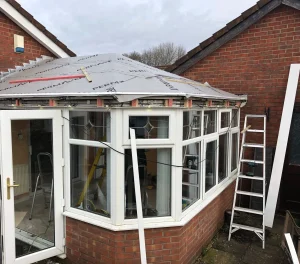
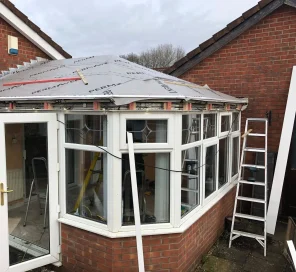
Conservatory roof replacement involves removing the existing roof and installing a new system in its place. The main structure of the conservatory can often stay as it is, which means you do not need to rebuild the entire room.
Older conservatories are usually fitted with polycarbonate or basic glass roofs. These were never designed to provide proper insulation, which is why they struggle with temperature control and noise. Replacing the roof gives you the opportunity to install a more advanced system that performs better in everyday use.
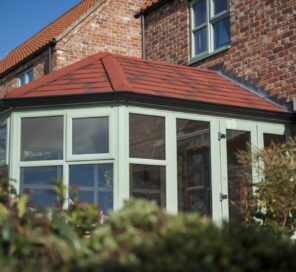
Modern replacement options include insulated tiled roofs, solid panel systems and hybrid designs that combine solid sections with glazing. These are designed to make the conservatory feel more like a proper part of the house.
If you want to see how this works in practice, you can view our gallery or look at recent work in areas such as conservatory roof replacement in Manchester and conservatory roof replacement in Liverpool.
Conservatory Roof Replacement Vs Insulation: What’s The Difference?
The difference between these two approaches comes down to how much change you are looking for.
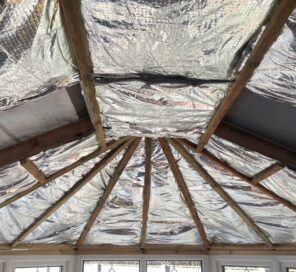
Conservatory ceiling insulation is added to the inside of your existing roof. It improves thermal performance by helping to retain heat and reduce temperature swings. It doesn’t change the structure or external appearance of the roof.
Replacement removes the existing roof and replaces it with a completely new system. This changes both how the roof performs and how the conservatory looks and feels.
Insulation can improve comfort in the short term and works best where the structure is still in good condition. Replacement goes further by dealing with underlying issues such as ageing materials, poor insulation and ongoing leaks.
Neither option is automatically right or wrong. It depends on what your conservatory needs.
When Insulation May Be Enough
Internal insulation can work well in the right situation. It’s often chosen by homeowners who want to improve comfort without committing to a full replacement.
It tends to suit conservatories where the roof is still structurally sound and not showing signs of failure. If there are no leaks, no major cracks and no ongoing damp problems, insulation can help regulate temperature and make the space more usable.
Some homeowners also choose insulation when they are working to a tighter budget or looking for a quicker upgrade. It can be fitted with less disruption and doesn’t involve removing the existing roof.
If your main concern is reducing heat loss or cutting down on glare, insulation can offer a noticeable improvement. Our guide on the best type of conservatory roof insulation explains how different systems perform and what to expect.
For a step by step breakdown, you can also read how to insulate a conservatory roof.
That said, insulation will not solve every issue. If the roof itself is the problem, covering it internally only goes so far.
When Full Roof Replacement Is The Better Option
In many cases, replacing the roof is the more reliable long term solution.
If your conservatory leaks, suffers from heavy condensation or feels uncomfortable for most of the year, these are signs that the existing roof is no longer performing as it should. Insulation alone will not fix those problems.
Older polycarbonate roofs are particularly prone to temperature swings and noise. Glass roofs can also struggle with heat build up and glare, especially in direct sunlight. Replacing these with an insulated system makes a significant difference.
Homeowners who want to turn the conservatory into a proper living space usually lean towards replacement. A new roof can make the room feel closer to an extension, rather than a space that is only usable in certain conditions.
If you’re dealing with recurring problems such as leaks, our guide on how to stop a conservatory roof from leaking explains why these issues often return without a full upgrade.
It’s also worth understanding why conservatories are cold in the first place, as this often points directly to the roof.
Replacement Roof Options
If you decide to replace the roof, there are several options to consider. Each one offers a different balance of insulation, light and appearance.
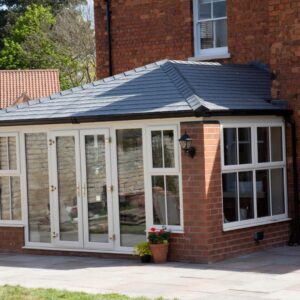
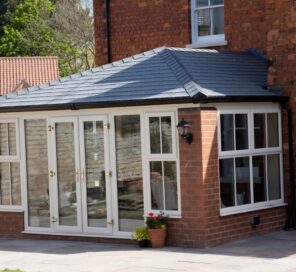
A tiled conservatory roof is one of the most popular choices. It provides strong insulation and gives the conservatory a finish that blends in with the rest of the house. Lightweight systems are designed to avoid putting unnecessary strain on the existing structure.
Solid panel roofs focus on thermal performance. They’re fully insulated and help maintain a consistent temperature throughout the year. These are often chosen where comfort is the main priority.
Glass roofs are still an option, particularly for those who want to retain maximum natural light. Modern glass performs better than older systems, though it doesn’t offer the same level of insulation as a solid or tiled roof.
Hybrid designs combine solid sections with glazing. This allows you to keep natural light while improving insulation in key areas.
Choosing between these options depends on how you use the space and how much light you want to keep.
Cost Comparison
Cost is often one of the biggest factors when deciding between insulation and replacement.
The cost of conservatory roof insulation is usually lower because it involves working within the existing structure. Materials, labour and installation time are all reduced compared to a full replacement.
The cost of conservatory roof replacement is higher, as it involves removing the existing roof and installing a new system. However, it also delivers a more complete improvement in performance.
Several factors affect both options:
- The size of the conservatory has a direct impact on material and labour costs
- The type of roof or insulation system chosen
- The shape and style of the conservatory
- The condition of the existing structure
- Any additional work required, such as strengthening or repairs
If you want a clearer idea of pricing, our guide on conservatory roof replacement cost explains what influences the final figure and what to expect.
Planning Permission & Building Regulations
Planning permission isn’t usually required for conservatory roof replacement, but there are exceptions depending on the property.
Building regulations are more relevant, particularly when installing a solid or tiled roof. These rules are there to make sure the structure meets current standards for insulation and safety.
The exact requirements depend on the design of the conservatory and how it connects to the main house. A proper survey will confirm what’s needed before any work begins.
If you want a more detailed explanation, our guide on planning permission for changing a conservatory roof covers this in full.
When Neither Option Is The Right Answer
There are situations where neither insulation nor replacement is the best solution.
If the conservatory is very old, poorly built or structurally unsound, it may not be worth upgrading the roof alone. Issues with the base, frame or foundations can limit what you can achieve.
In those cases, rebuilding the conservatory or replacing it with a full extension may offer better long term value. This is something that should be assessed properly before committing to any work.
A survey helps identify whether the structure is suitable for improvement or whether a more substantial change is needed.
Final Thoughts & Next Steps
Choosing between insulation and replacement comes down to what you want from the space and the condition of your conservatory.
- Insulation can improve comfort where the roof is still in good shape and the goal is to make the room easier to use.
- Replacement is the stronger option where the roof is failing, the room is rarely used or you want a space that feels more like part of the home.
There is no one size fits all answer. The best way to decide is to look at your conservatory as it stands and understand what it needs.
If you’re unsure which route makes the most sense, speaking to someone with experience can save time and avoid spending money on the wrong option. A proper assessment will tell you whether insulation is enough or whether a full replacement is the better investment.
To get clear advice based on your property, you can arrange a free survey and quote with our team. Call our team on 0800 193 8033, email us at info@directroofandbuild.co.uk, or fill in our online contact form.
 OUR BLOG